If your knee still hurts months after a knee replacement, and your surgeon has found no problem with the implant, specialist pain treatment may help. At Wessex Pain Clinic, our consultants in pain medicine assess persistent pain after knee replacement and offer treatments such as genicular nerve injections and radiofrequency ablation, at our clinics in Winchester, Southampton and Basingstoke.
For many people, a knee replacement significantly improves quality of life and relieves joint pain. However, a notable proportion of patients are left with persistent, or chronic, pain after their surgery.
This can happen even when the operation has gone well and follow-up examinations and X-rays are normal. Your knee may work well, yet the pain does not go away. We meet many patients who have been told there are no further options for managing their pain.
We assess your pain and discuss treatment suited to your symptoms and goals. For some patients this includes genicular nerve injections, with radiofrequency ablation considered afterwards if appropriate. Both treatments target small nerves around the knee, aiming to reduce the pain signals it sends.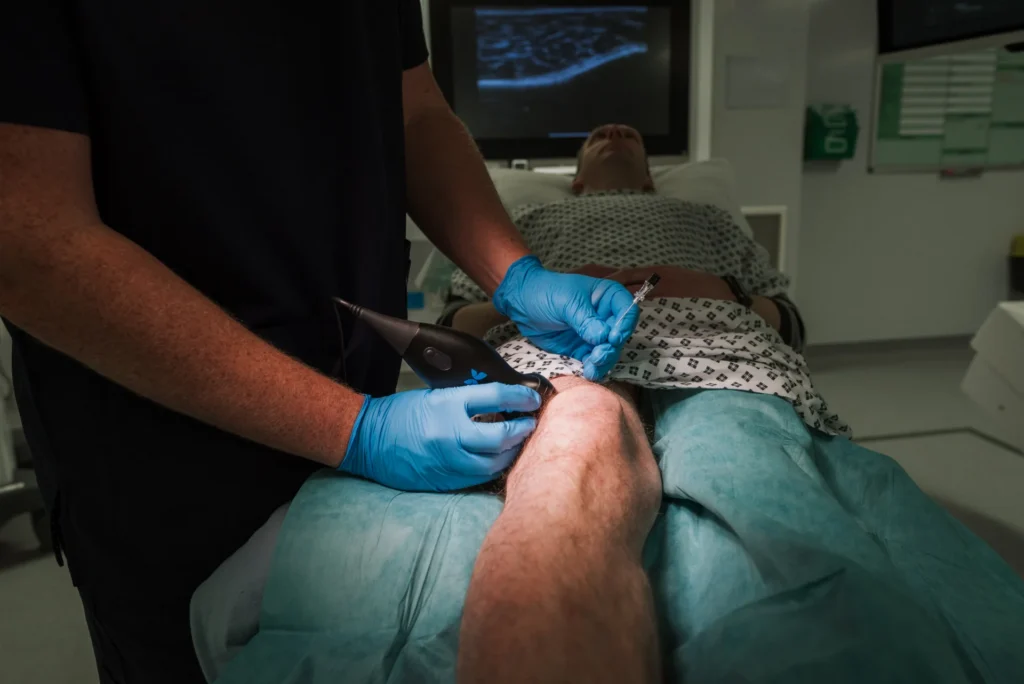
Some pain is expected during recovery, and improvement can continue for many months. Pain that is not settling, is getting worse or keeps interfering with everyday life deserves a proper assessment.
A painful knee replacement can have several explanations. These include problems with the implant or the surrounding tissues, irritation of nerves, and changes in how the nervous system processes pain. Sometimes the pain comes from elsewhere, such as the hip or lower back.
Nerve-related symptoms can include burning, shooting pain or sensitivity around the knee. Other people describe a persistent deep ache. How you describe your pain helps guide the assessment, but it cannot establish the cause on its own.
A satisfactory X-ray does not mean your pain is imaginary. It does mean we may need to look beyond the replacement itself to understand it. Pain that continues long after an operation is known as chronic post-surgical pain, and it is something our consultants assess and treat regularly. You can also read more about the wider causes of knee pain we see.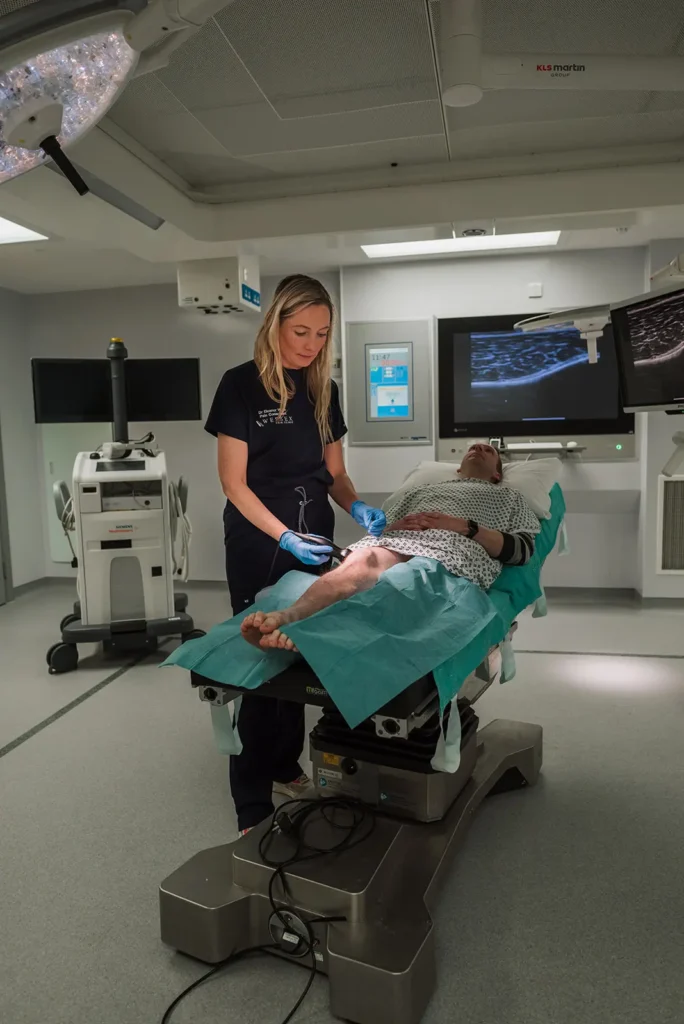
Before considering a nerve injection or radiofrequency treatment, we need to be confident that your knee replacement is satisfactory, with no ongoing orthopaedic concerns such as infection, loosening or instability. This check is best carried out by an orthopaedic surgeon, often the surgeon who performed your operation.
Most patients who come to us have already seen their surgeon, who has confirmed this. If that has not yet happened, we may recommend you see a knee surgeon before any treatment with us. If you have been assessed and no clear surgical cause has been found, specialist pain management may be a useful next step.Revision surgery, where the knee replacement is redone, can be important when there is a problem to correct, such as a loose or unstable implant.
However, a revision does not reliably resolve pain when no correctable cause has been identified. If nerve irritation or increased pain sensitivity is contributing, another operation may not address it and could make the nerve irritation worse. Your orthopaedic surgeon and pain consultant can help you decide on the most appropriate route.The genicular nerves carry sensation from the structures around the knee. A genicular nerve block places local anaesthetic close to selected nerves to see whether reducing their signals eases your pain. In some cases steroid may also be used around the nerves, and your consultant will explain the proposed medication.
This is different from a standard knee injection into the joint itself, sometimes called an intra-articular injection. Ultrasound is used to guide the needles accurately into position next to the nerves.
Afterwards, you may be asked to record your pain and how comfortably you manage your usual activities. Meaningful temporary relief helps show whether radiofrequency treatment is worth considering.
For some people the block wears off quickly, while for others the benefit lasts many months. Short-term relief does not mean the injection has failed, as a diagnostic injection is designed to provide information. Equally, a successful block cannot guarantee the result of a later procedure.
Genicular nerve radiofrequency ablation, also called radiofrequency denervation, uses controlled heat delivered through specialised needles to create a small lesion on the genicular nerves. The aim is to interrupt pain signals from the knee.
The goal is relief that lasts longer than a local anaesthetic block. The procedure does not replace, repair or alter your knee implant.
Some patients gain relief for several months or years, while others have little or no benefit. These nerves can regrow and the pain can return, and repeat treatment may sometimes be considered after a useful response.A procedure is one possible part of your care. Depending on your assessment, your plan may also include medication reviewM and psychological support with sleep and the wider effects of persistent pain.
We will talk about what progress would mean for you, whether that is walking further, managing stairs, sleeping more comfortably or being more independent. Reducing your pain can create the opportunity to work towards those goals.
Seek urgent medical advice if you notice increasing redness, heat or swelling, discharge from the wound, a fever or rapidly worsening pain. New calf pain or swelling also needs urgent assessment. Contact your surgical team, GP or NHS 111 rather than waiting for a routine pain clinic appointment.
Call 999 if you have chest pain or difficulty breathing, particularly alongside leg pain or swelling.Wessex Pain Clinic provides consultant-led pain assessment for patients across Hampshire. You can see us at our Winchester headquarters at Medicana Hospital, or at our Southampton and Basingstoke clinics. Remote consultations are also available.
At your appointment we will review your symptoms, previous treatment and any investigations, then discuss whether genicular nerve injections, radiofrequency ablation or another approach may be suitable for you.If you are living with ongoing pain after a knee replacement, our team can help you explore the next steps. Book an appointment with one of our consultants in Winchester, Southampton or Basingstoke.
This page was written by Dr Tom Bloomfield FRCA FFPMRCA, Consultant in Pain Medicine and co-founder of Wessex Pain Clinic. GMC number: 7458087. Last reviewed October 2026.
 Connor Mitchell
Trustindex verifies that the original source of the review is Google.
Great experience all round with Dr Tom. Incredibly knowledgeable, meticulous, and considered in his approach. Came here for a long-term chronic issue and felt both the procedures and guidance he gave me were immensely helpful. Would certainly recommend for anyone in a similar predicament. :-) Sophie JonesAfter countless attempts to diagnose and help my headaches, Wessex Pain Clinic was truly my last hope. Dr Bloomfield worked out the problem from our first consultation, and my pain has significantly improved - nearly 100%. I am so thankful. Friendly, professional and efficient practice, would highly recommend.
 Andrew BroomeGreat care
 Jools ADr Eleanor Hyde
 Nickie HarkerWe had a wonderful experience with Dr Eleanor Hyde today. She was so empathetic and caring, she took time to listen and really understand my daughter’s situation. We went away with a really good plan for the way forward with ongoing support from Dr Hyde thank you
 Rob GoodA fantastic experience from start to finish. You're made to feel welcome and comfortable, and Dr Blomfield and his team were fantastic and made you feel at ease.
 C HatFive stars isn't enough for Dr. Hyde. After many months of pain, I finally found someone who listened, explained everything clearly, and created a treatment plan that worked. I felt cared for at every appointment - never rushed, never dismissed. My shoulder is now pain free. If you're suffering, don't wait, book in with Dr. Hyde. Truly excellent care from start to finish.
 Governance LodestarFollowing earlier pain procedures and surgery, I was referred to Dr Tom Bloomfield at the Wessex Pain Clinic by my previous consultant. The consultation process was efficient and welcoming with Dr Bloomfield listening to my concerns and recommending a follow-up denervation. The procedure took place at Medicana in Winchester about a month later. I felt looked after throughout and the staff at the clinic and hospital were all very friendly and put me at ease. The procedure was effective to the point where I don’t require anything further and my back will likely stay pain free for at least the next few years. After all the surgeries I’ve had over the last few years, a quick day procedure was a far more suitable alternative for me as I was up and active again within 24 hours. I’d highly recommend Wessex Pain Clinic to anyone requiring assistance with chronic pain.
 Nikki DenéeDr Hyde treated my shoulder before I went skiing. She was very professional and helpful and kind throughout the treatment. I would highly recommend her personal, friendly and caring approach. She really took the time to listen and put me completely at ease, and I came away feeling genuinely looked after. I can’t recommend her enough.
 Diana BlackerI could not recommend Dr Ellie Hyde more highly. After months of dead ends it was unbelievably refreshing to see a Consultant with such a positive and proactive approach. She was determined to find a solution to a family member’s chronic pain issues. Her treatment plan was (and continues to be) highly effective. Her bedside manner is superb, everything is properly explained and we always feel that she will give us all the time that is needed. The world needs more Dr Hydes!
Our friendly team is on hand to support you every step of the way. Please get in touch at any time.
We and our partners, including Google, use cookies and personal data to analyse traffic and for ads personalisation and measurement. You can accept, reject or choose which cookies to allow. Privacy Policy • Cookie Policy • Terms & Conditions • Google Privacy
We use cookies to help you navigate efficiently and perform certain functions. You can choose which categories to allow below. Cookies categorised as Necessary are always active.
We also use third-party cookies for analytics and advertising. These are only stored with your consent. You can update or withdraw consent at any time via the cookie icon at the bottom-left. This site operates under UK GDPR, the Data Protection Act 2018, and the Privacy and Electronic Communications Regulations (PECR). Cookie Policy • Privacy Policy
Necessary cookies are required for core site features including security, network management, and consent storage.
| Cookie | Duration | Description |
|---|---|---|
hmdg_cookie_consent | 180 days | Stores your cookie consent preferences. |
PHPSESSID | Session | WordPress session identifier. |
wordpress_logged_in_* | Session | WordPress login authentication. |
Functional cookies enable enhanced features such as live chat and remembering preferences.
| Cookie | Duration | Description |
|---|---|---|
wp-settings-* | 1 year | Stores user interface preferences. |
Analytics cookies help us understand visitor behaviour. Controls analytics_storage for Google Analytics 4.
| Cookie | Duration | Description |
|---|---|---|
_ga | 2 years | Google Analytics — distinguishes users. |
_ga_* | 2 years | Google Analytics 4 — session persistence. |
_gid | 24 hours | Google Analytics — distinguishes users. |
_gat | 1 minute | Google Analytics — throttles request rate. |
Performance cookies collect aggregate, anonymous data about site performance.
| Cookie | Duration | Description |
|---|---|---|
_gat_gtag_* | 1 minute | Google Tag Manager — rate throttle. |
Marketing cookies track visits to deliver relevant ads. Controls ad_storage, ad_user_data, and ad_personalization.
| Cookie | Duration | Description |
|---|---|---|
_gcl_au | 90 days | Google Ads — conversion tracking. |
_gcl_aw | 90 days | Google Ads — click attribution. |
_gac_* | 90 days | Google Ads — campaign information. |
IDE | 1 year | Google DoubleClick — ad targeting. |
Powered by HMDG • Cookie Policy
